Here's what 30 game developers had to say about working with Godot


It's been 1 week since I first reached out to the community about The State of Godot and I'm massively grateful to the feedback from the community.
In this post, I'll breakdown the results from our first batch of respondents and share some thoughts on what this small snapshot tells us about the Godot developer community.
Aims of the survey
As a freelance Godot developer, I wanted to learn more about other users of the engine and have the chance to hear from Godot power users about the types of projects they're working on.
Where are the respondents from?
I did my best to reach out to Godot developers in primarily Godot focused online spaces such as:
- The Godot subreddit
- The official Godot LinkedIn community
- The Godot Cafe Discord server
- Using the #godot and #godotengine hashtags on Bluesky
Limitations of this research
I'll be the first to admit that 30 users isn't the biggest of sample sizes to draw any concrete conclusions from. In this first pass of the results, I simply want to share some early insights and hopefully draw some more attention to the survey so that we can continue to gather respondents and gain more valuable insights down the line. That being said, please do share the survey with any Godot developers you know:
Link to the survey: https://gdindies.com/the-state-of-godot-survey/
I'm also aware that only having an English language version of the survey limits the number of people who can respond too. There are large Godot communities across non-English speaking countries (GodotCon happens in Berlin for a reason) who may not have felt comfortable answering a longer survey in their 2nd or 3rd language.
With that said, let's jump into the feedback from the Godot community and see what's they have to say about the state of Godot.
The results
Current country
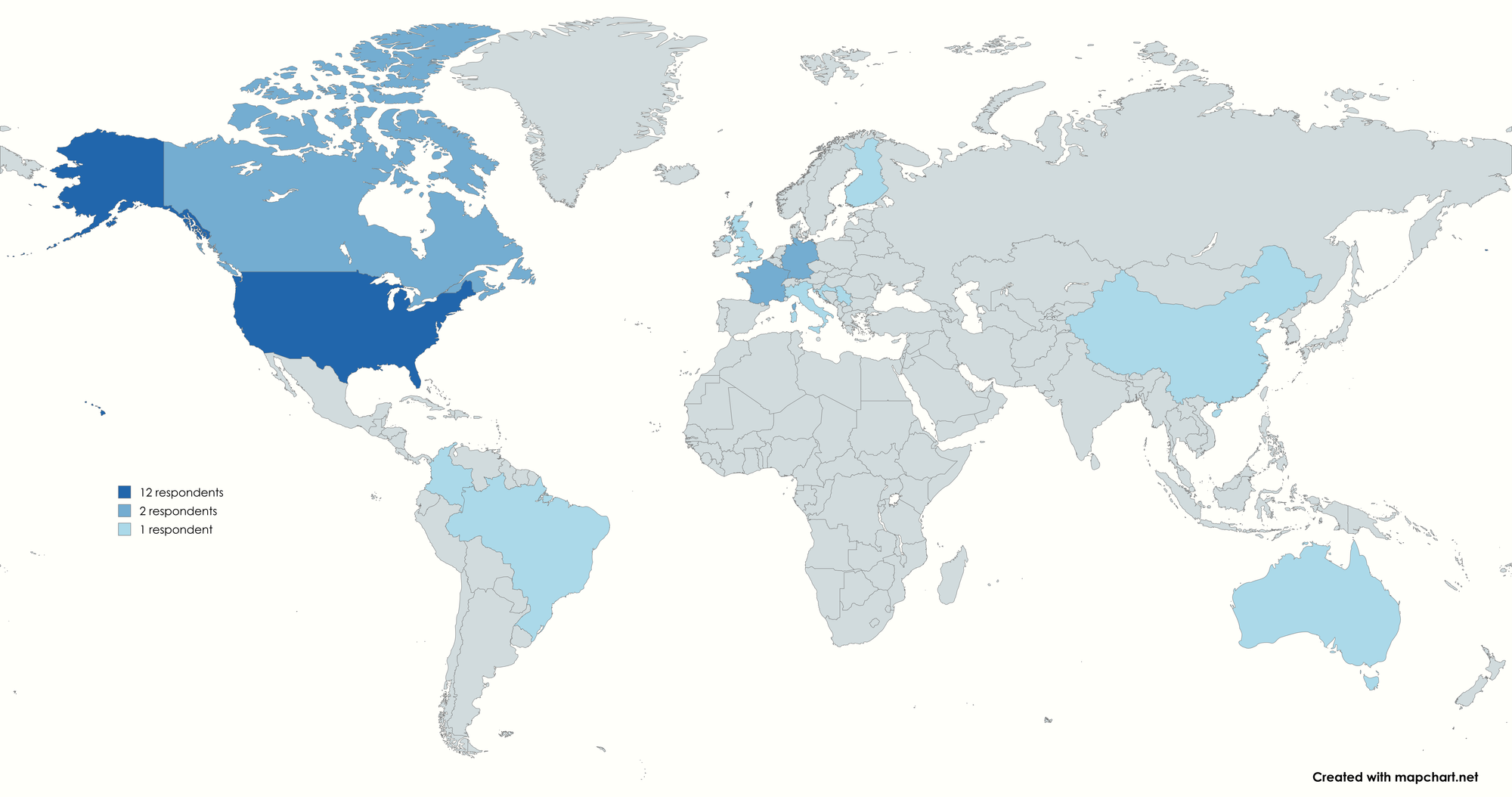
The first question in the survey asked where Godot developers are currently living.
Leading the pack as a base of Godot operations is the USA with 12 respondents. After this, there's a power gap until we reach Canada, France, Germany and the UK with 2 respondents each. Finally, we also received responses from users based in Brazil, China, Colombia, Croatia, Finland, Italy and Serbia.
As previously stated in the limitations section, since this is an English language survey, the responses are more or less as I expected. There is a heavy anglophone skew with a smattering of other countries.
Age of Godot developers
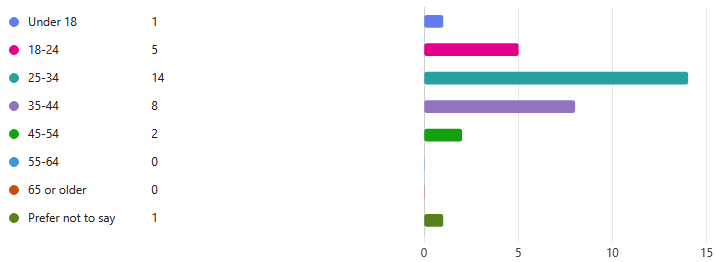
When asked about their age, the majority of developers reported that they are currently between the ages of 25-34.
I'll be honest, this surprised me somewhat as I was expecting the age range to be leaning more towards university age students and recent graduates due to Godot's reputation as the new cool kid on the block. It's good to see that a good number of seasoned developers who have perhaps had the chance to explore other engines earlier in their careers are looking favorably at Godot.
Gender of Godot developers
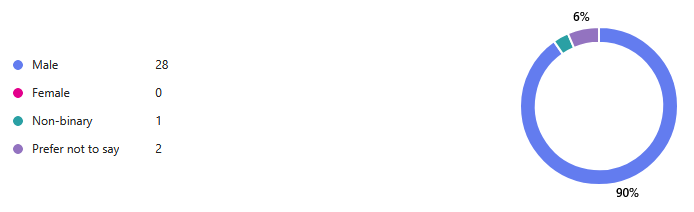
There is an outdated trope that says: "there are no girls on the internet".
While, of course, this is a ridiculous sentiment, it's still interesting to note that not a single respondent to this survey identifies as female.
Representation is important and I want to make sure that the experiences of all Godot developers are reflected in the results as our data set grows. If you know of any Godot developers who identify as female please do share a link to the survey so we can make sure that the results represent as many different viewpoints as possible.
Link to the survey: https://gdindies.com/the-state-of-godot-survey/
Education
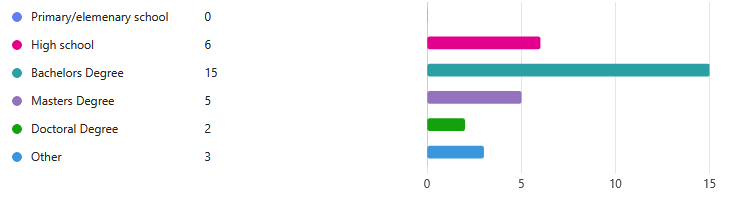
Most likely owing to the age range of respondents, with the majority being over 25, most Godot developers are university educated and will have a Bachelors degree or some form of postgraduate degree.
I don't think we have a large enough sample size to draw any reasonable conclusions about this, the results are most likely skewed by the platforms that hosted the survey itself. For example, by sharing the survey to LinkedIn that automatically creates a bias towards university education due to the demographics of the platform itself.
Learning resources
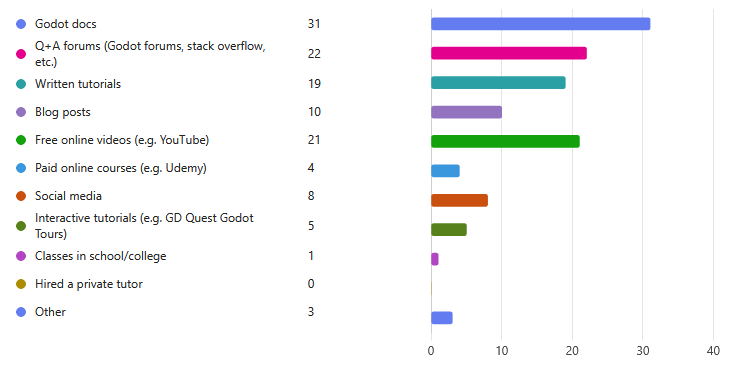
Every single respondent to the form noted that they used the official Godot documentation to support them when working on Godot projects.
Other popular supporting resources include free online videos, Q+A forums and written tutorials.
Role in game development
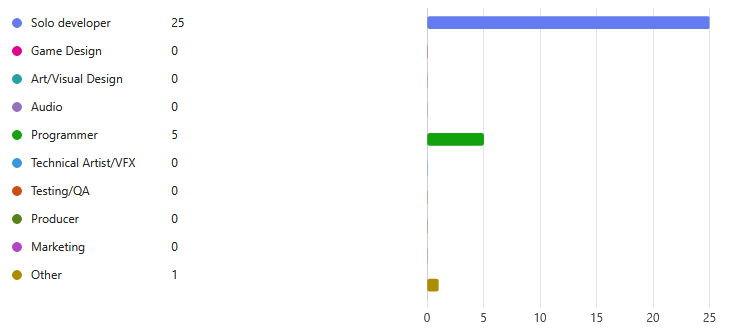
Based on conversions I've had with Godot developers while conducting this research, a good number of them are using Godot as a learning tool to explore the field of game development.
As a result of this, Godot is home to a large number of solo developers cutting their teeth in the game making space.
Godot for professional projects
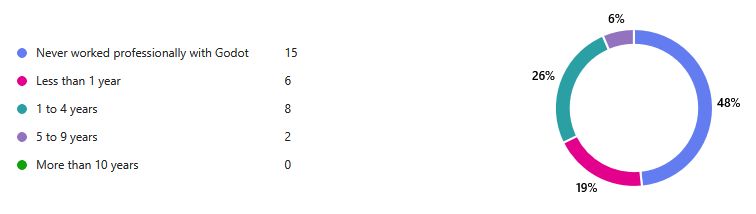
There is currently a close split between professional and non-professional Godot users from the first round of results.
As the engine grows in popularity, I'd expect this split to stay more or less the same. Godot is a great engine for developers looking to make games for the first time so I'm expecting to see plenty of newcomers arriving into the community even if our current crop of hobbyists grow into paid professionals.
Type of studio
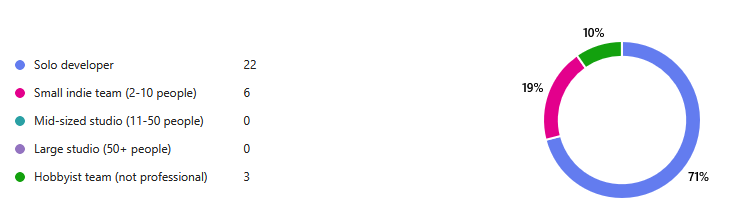
As we previously discussed, a large number of developers in the Godot space are working on projects alone.
For those who work with team mates, the team sizes are limited to small and/or hobbyist teams with less than 10 people.
Length of time working with Godot
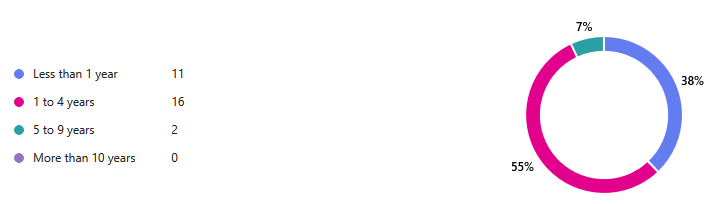
I feel that these results are as expected, from my perspective Godot existed in relative obscurity until at least the 3.x releases (starting in 2018) before growing in popularity from the later 3.x versions through to the current 4.x branch.
Godot 4 was officially released in 2023 which also coincided with Unity's controversial (and ultimately cancelled) runtime fee. This time period saw a number of Unity users, especially those in the indie space, look to Godot as an alternative due to the free and open source nature of the project negating any potential worries over future fees.
Genre of current projects
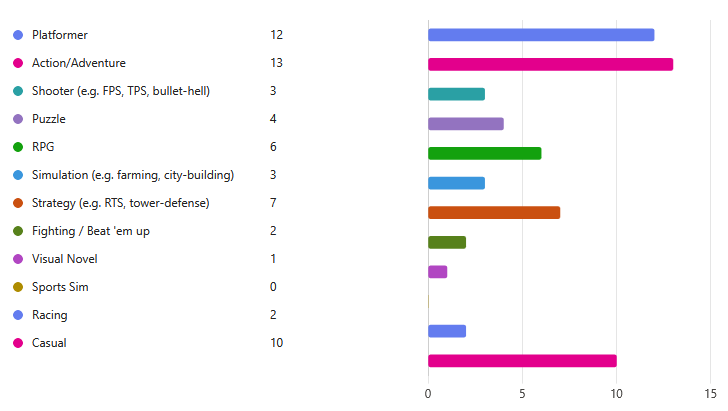
Platformers, Action/Adventure and Casual games were the leading genres currently being built by studios working with Godot. Most likely owing to the engines strengths in the 2D arena.
It's also worth mentioning that for our solo developers learning to work with the engine as a hobby, platformers are the most common starting point.
Monetization
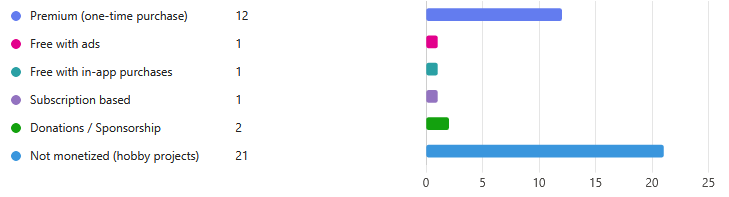
The majority of developers working with Godot are working on projects to meet their own personal goals rather than towards monetization.
Of those who are aiming to monetize their projects, most opting for a one-time purchase rather than running an advertising supported or subscription based game.
Target platforms
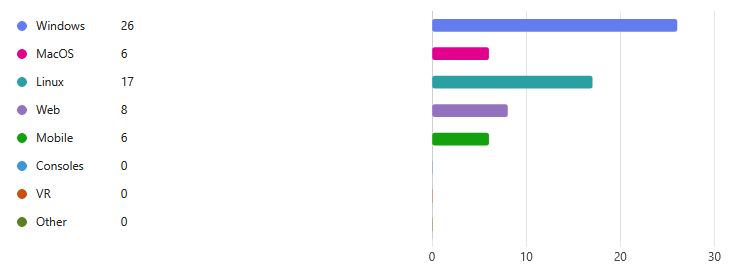
With most Godot developers, PC is the place to be. Itch.io and Steam are highly popular storefronts for Godot projects and offer the path of least resistance to publishing your games. I'm excited to see so many developers targeting Linux, mist likely down to Godot's out-the-box support for Linux-builds which allows developers to target platforms like the Value Steam Deck.
Currently, none of the respondents are targeting any form of console release. Most likely due to the barrier of entry relating to acquiring developer kits and/or playing for porting support.
Why Godot?
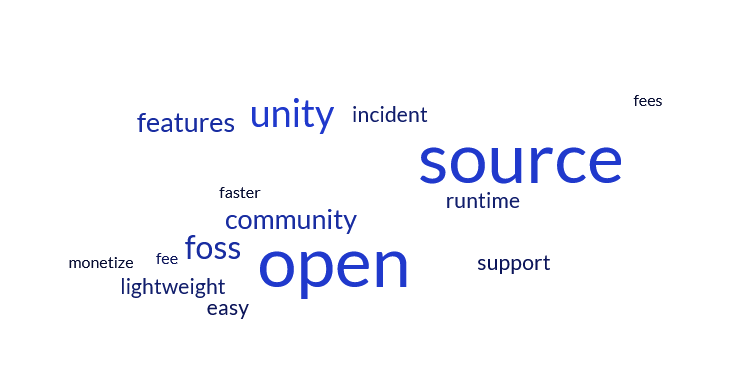
The most common reason that developers pick Godot is due to its open source nature. A lot of respondents commented that they appreciated that they could make any modifications they wanted to the engine and were not tied down to any troublesome licensing agreements.
Other reasons for selecting Godot include how lightweight the engine is, running well even on older hardware and how open and welcoming the Godot community is.
It's also worth noting that a few developers specifically name dropped the Unity runtime fee as a direct reason for them opting to move to the Godot engine.
Challenges with Godot
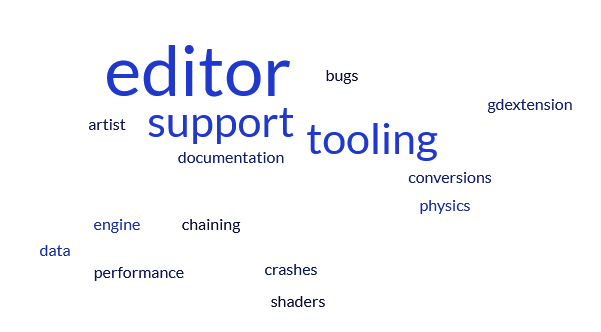
When reporting issues they face with the Godot engine, some common complaints included issues in setting up workflows for 3D projects, areas lacking in documentation (e.g. reference docs for GDExtensions) and not being able to effectively report crashes and bugs within the engine itself.
Godot version
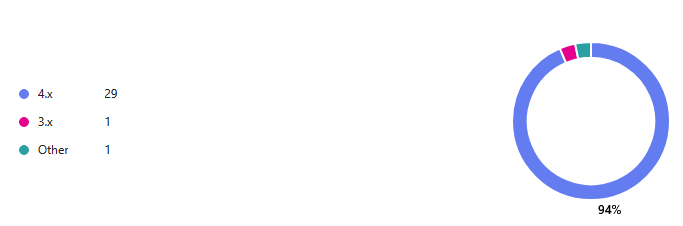
Godot 3 is dead, long live Godot 4!
More seriously, the vast majority of Godot 3.x releases are no longer receiving any form of support. For now, 3.6 and the soon to be released 3.7 will continue to receive bug fixes and patches for platform support but Godot themselves state that 4.x is the recommendation for new projects as 4.x will be long supported after 3.x stops development.
You should only create a 3.x based project if you require a specific feature not supported by Godot 4.x (e.g. GLES2/WebGL 1.0).
Editor choice
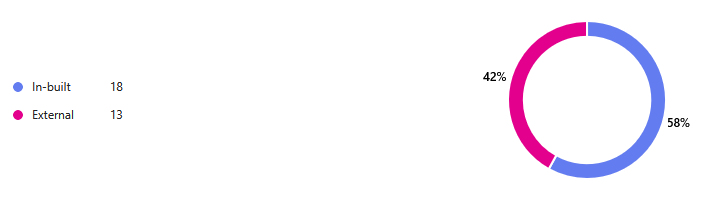
I was not expecting as many users to opt for an external editor as opposed to the in-built script editor. Most users reported using VSCode as their editor of choice outside of Godot.
Common use cases for using an external editor include writing C++ for extensions and making changes to the engine itself or writing shader code.
Programming language
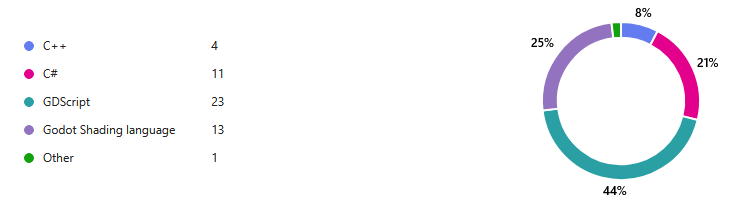
The majority of Godot users opt for GDScript over C# when writing their game logic itself.
A common comment I saw related to C# not fully supporting web exports as a reason for choosing GDScript.
Operating system
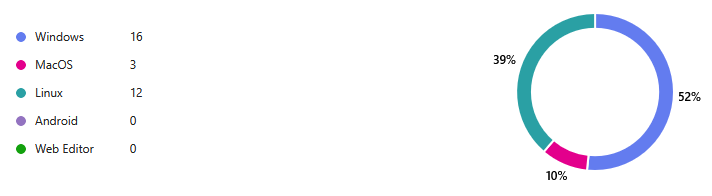
The FOSS representation is strong with this one. According to statcounter.com 71.1% of desktop PCs use a Windows operating system vs just 4.27% on a Linux-based OS. However, in the world of Godot the usage of Linux ramps up massively to 39%.
Godot users love open source software, which means Godot users are more likely than the average PC user to use a Linux based machine day to day.
Third party tools
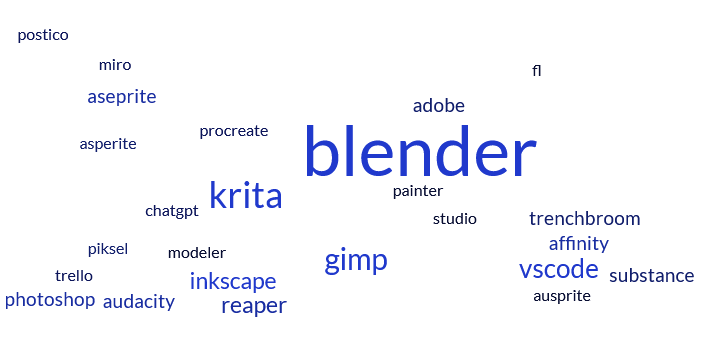
A lot of the usual suspects are reported here, many of which are useful irrespective of which game engine you're working with. I will note that there is a strong open source presence here though.
Links to popular tools are as follows:
- 3D modelling: Blender, TrenchBroom
- 2D art: Krita, Inkscape, GIMP, Aseprite, Affinity, Photoshop
- Code editor: VSCode
- Audio: Audacity, Reaper, FL Studio
Use of AI
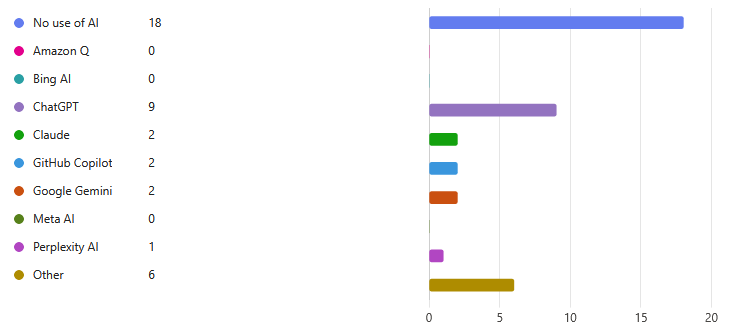
This was one of the more divisive questions in the survey. Use of AI in game development (and across creative industries as a whole) is a very polarizing with respondents to the survey making use of the 'Other' response to make their thoughts in AI clear.
One of the strongest anti-AI stances was as follows:
Who Godot developers who did choose to work with AI, ChatGPT was the most common selection, though some commented that they made use of ChatGPT for 'deriving documentation' or 'more as a search engine than for code generation'.
Employment status
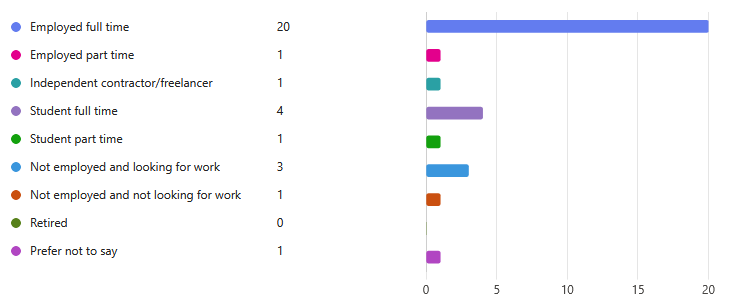
A large majority of Godot users are in full time employment, but most are working roles which do not require their knowledge of the engine. As you will see in future questions, the majority of Godot users work in some form of STEM career not directly related to game development.
Work location
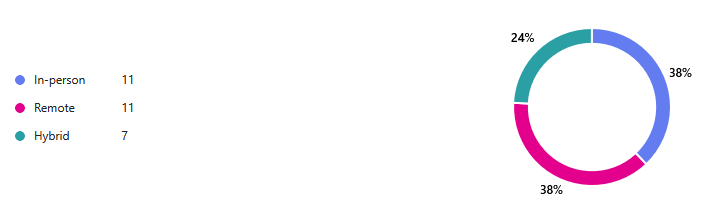
Given that a lot of Godot users have a role in IT, it means that there is a lot of opportunity for remote work. There is a very even split between in-person, hybrid and fully remote positions.
Primary source of income
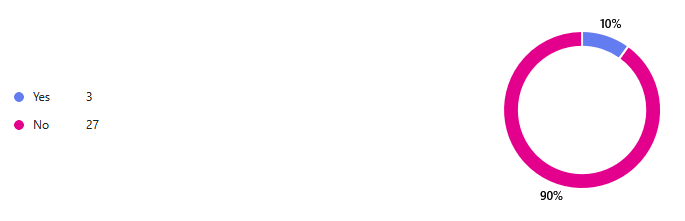
If you are a Godot developer, you're most likely a fractional Godot developer. Meaning your work in Godot is supplemented by another form of income, or your work in the Godot space is completely for fun!
For me personally, my income is split between developing game prototypes in Godot and working as a freelance web developer. I'm not yet at the point where my Godot work is my main source of income, but we're slowly getting there!
Job title
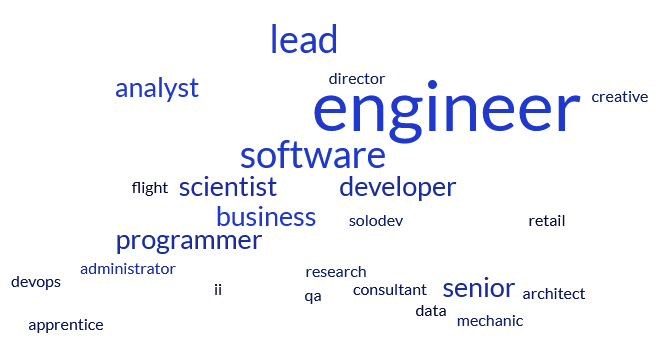
I found that most Godot users exist in the STEM space more 'traditional' IT roles.
Suggesting that a lot of Godot developers are skilled programmers looking to apply what they know to a more fun medium. Personally, I fall into this category too, having a background in web development and computer science education.
Samples of submitted job titles include:
- Software Engineer
- IT Administrator
- DevOps Architect
- QA Lead
- Business Analyst
- IT Consultant
- Data Engineer
Income
- $0 - 25,000: 2 respondents
- $25,000 - $50,000: 1 respondent
- $50,000 - $75,000: 3 respondents
- $75,000 - $100,000: 3 respondents
- $100,000+: 3 respondents
One important caveat worth immediately mentioning is that the vast majority of respondents do not work with Godot full time. 90% people from this survey are currently not making their primary income from Godot but rather an adjacent field like IT consultancy or non-Godot related software development.
Of the developers who reported that their income was primarily from Godot, and those who also shared their salary in USD. I can report that one fell in the range of $0 to $25,000 and the other was in the $50,000 to $75,000 range.
In order to gain more insights into the salary of full time Godot developers, we need more data so please do share the survey with your colleagues.
Link to the survey: https://gdindies.com/the-state-of-godot-survey/
Conclusions
I hope you've all enjoyed having a quick review of the first round of survey results.
Based on what we've seen so far, the majority of Godot users are making games outside of their day job, primarily working solo on a hobby project. The main draws to the engine are its open source nature and Godot has welcomed a number of former Unity developers looking to escape the runtime fee debacle despite Unity ultimately cancelling that change to their pricing policies.
The amount of developers earning a living directly from the engine is currently surprisingly low. However, as Godot Foundation Executive Director Emilio Coppola noted last year, this may mean there's a gap in the market for Godot consultancy roles to support the many part-time projects currently being created by smaller teams.
If you've enjoyed this article and would like to continue to support my work, please do consider joining the site as a member. I post articles weekly and each paying member means I can dedicate more time to planning and writing articles.
Additionally, I offer 1-to-1 tuition for anyone who'd like to learn about working with the Godot engine. If you'd like to work with a qualified computer science teacher please do reach out.