Forehead Chip: A solo dev's love letter to 80s sci-fi movies
Jared speaks with Cargary based solo dev Dave Kerr on his recent retro-inspired run and gun release Forehead Chip.

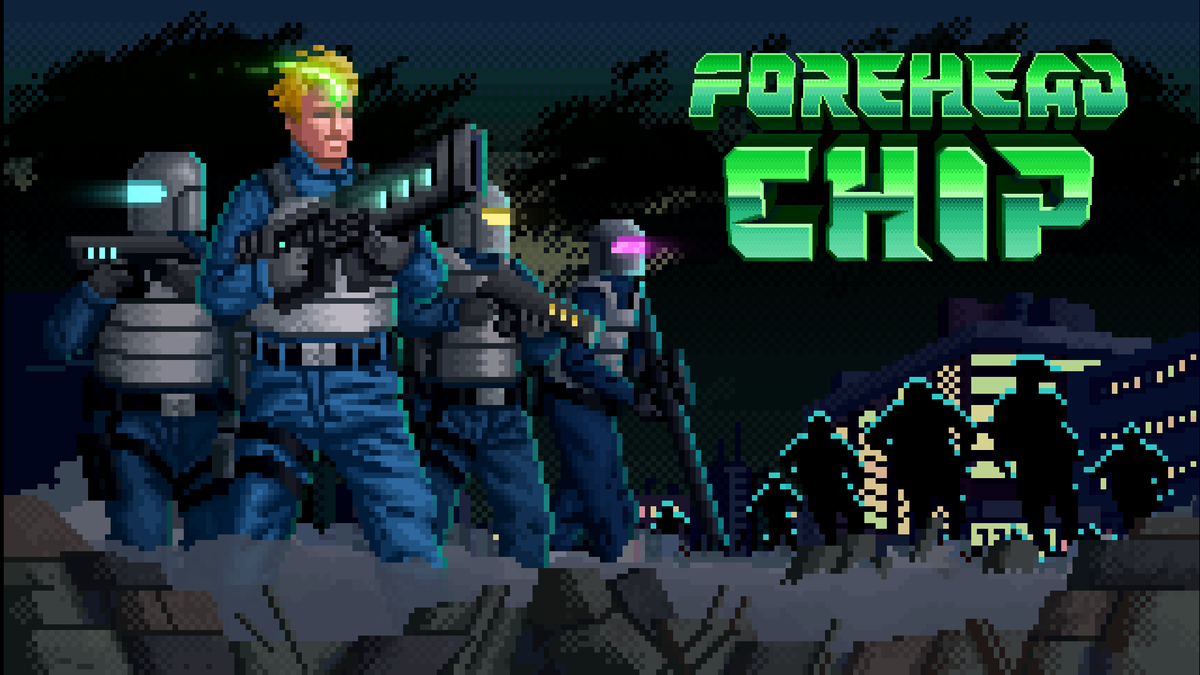
I recently had the chance to speak with Dave Kerr, about his recently released 80s throwback pixel-shooter Forehead Chip.

Dave Kerr is a solo developer based in Calgary, Canada and owner of Naturally Intelligent. In our interview, we discuss the trials of carrying his game through two major Godot releases, battling controller mapping, and running a competition live from a local theatre.
Jared: Hey Dave, thanks so much for your time today (and thank you for the Steam key for Forehead Chip!) I'm really looking forward to chatting about the game in more depth. For readers discovering Forehead Chip for the first time, how would you describe the game in your own words? Where did the initial idea come from?
Dave: Hi Jared, thanks for having me. Forehead Chip is a game that's like being in a classic 80s sci-fi movie! You play as Chip, an aimless young man who, along with his annoying brother Drey, have been signed up to join the Implant Corps by their parents.
Dave: In their hometown - Arca City - half the population have hand chip implants that regulate society into a functioning order (but at a cost...), and the Implant Corp soldiers are there to make sure the other half of the city, populated by unchipped Holdouts, are captured, chipped, and integrated.
Dave: To motivate recruits, the top soldier will win the Forehead Chip – a new fancy chip that gives them special privileges and prestige!
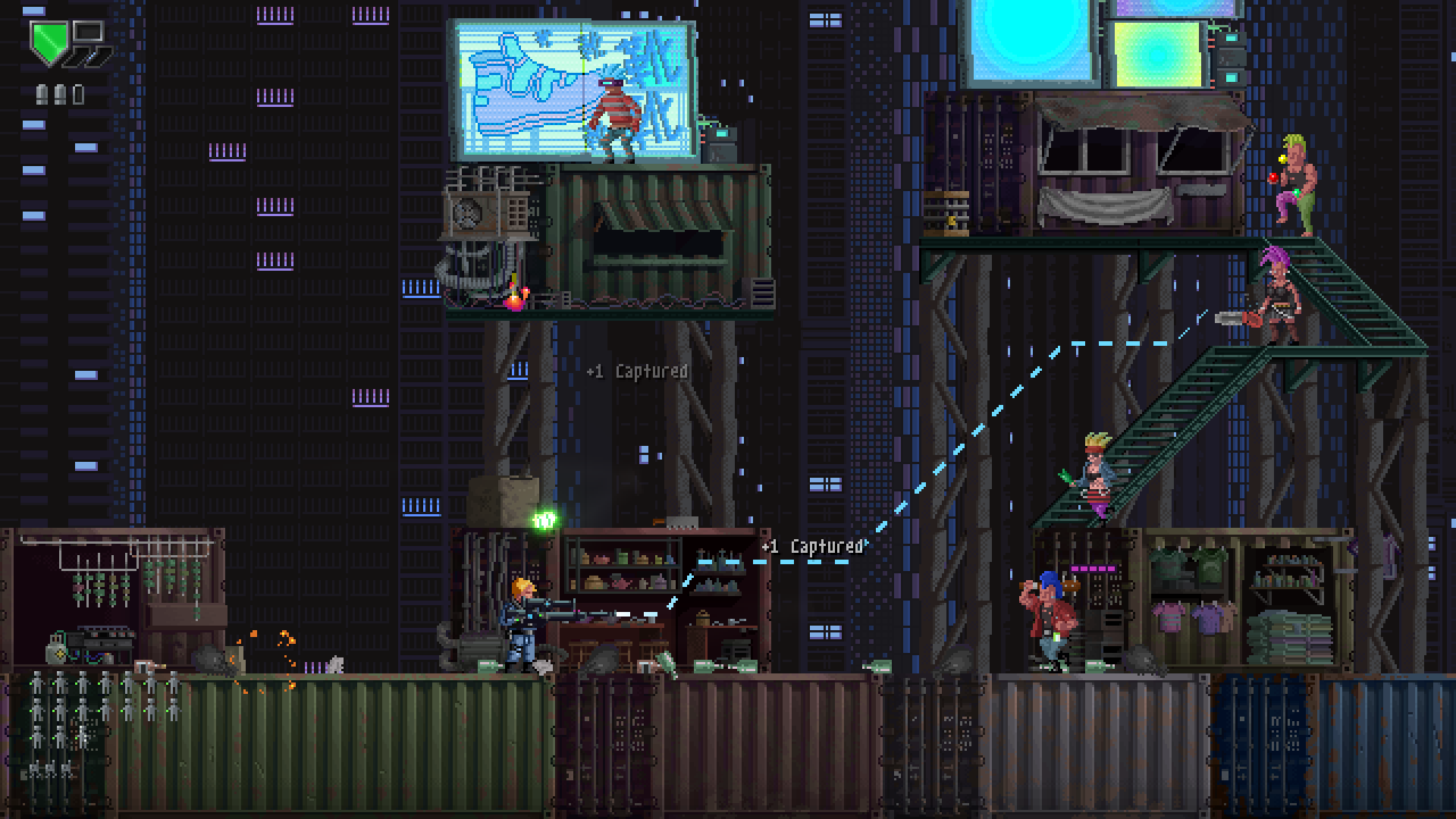
Dave: This idea came as a commentary, of sorts, on the future. Where we might be headed as a society. The game explores the ideas of programmable digital currency, surveillance gone bad, financial control in the hands of big-bad elites... You know, dystopian things. But presented as a utopia in-game. As you dig through the story, you can find what’s really happening under the surface. Or you might just go through the game believing everything is perfectly fine? It has a variety of endings and paths you can take. You can be the top soldier, be the best at combat, and win the picture-perfect life and never know what's going on, or take a pacifist path, or help the Holdouts, or you can even lose to the other NPCs if they win the Forehead Chip! We've even included a dialog-only path to an ending that involves no action at all.
Jared: It sounds like a lot of thought has been put into the world building and giving your players the choice about how they interact with the world. Was the original plan always to build the game with such a wide range of options? What did the earliest version of Forehead Chip look like?
Dave: Funnily enough, I started a prototype for Forehead Chip in 2018 in Godot 2 where you manage an apartment building, accepting or denying entrants, kinda like Papers Please crossed with Fallout Shelter. At the time, we only had made a poster concept art for the game. Later in 2020, we started a platforming prototype in Godot 3, which looked similar to what it is today. We did a bit of work here and there, but didn’t start putting in serious effort until late 2022 and onwards which is the version seen today currently built with Godot 4.6.2.
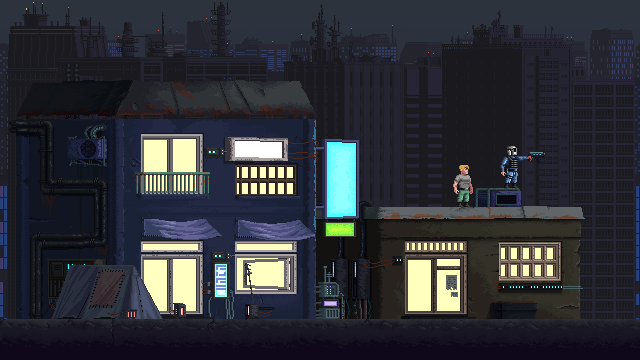
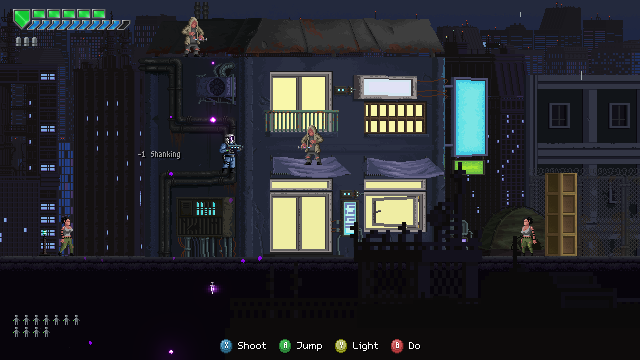
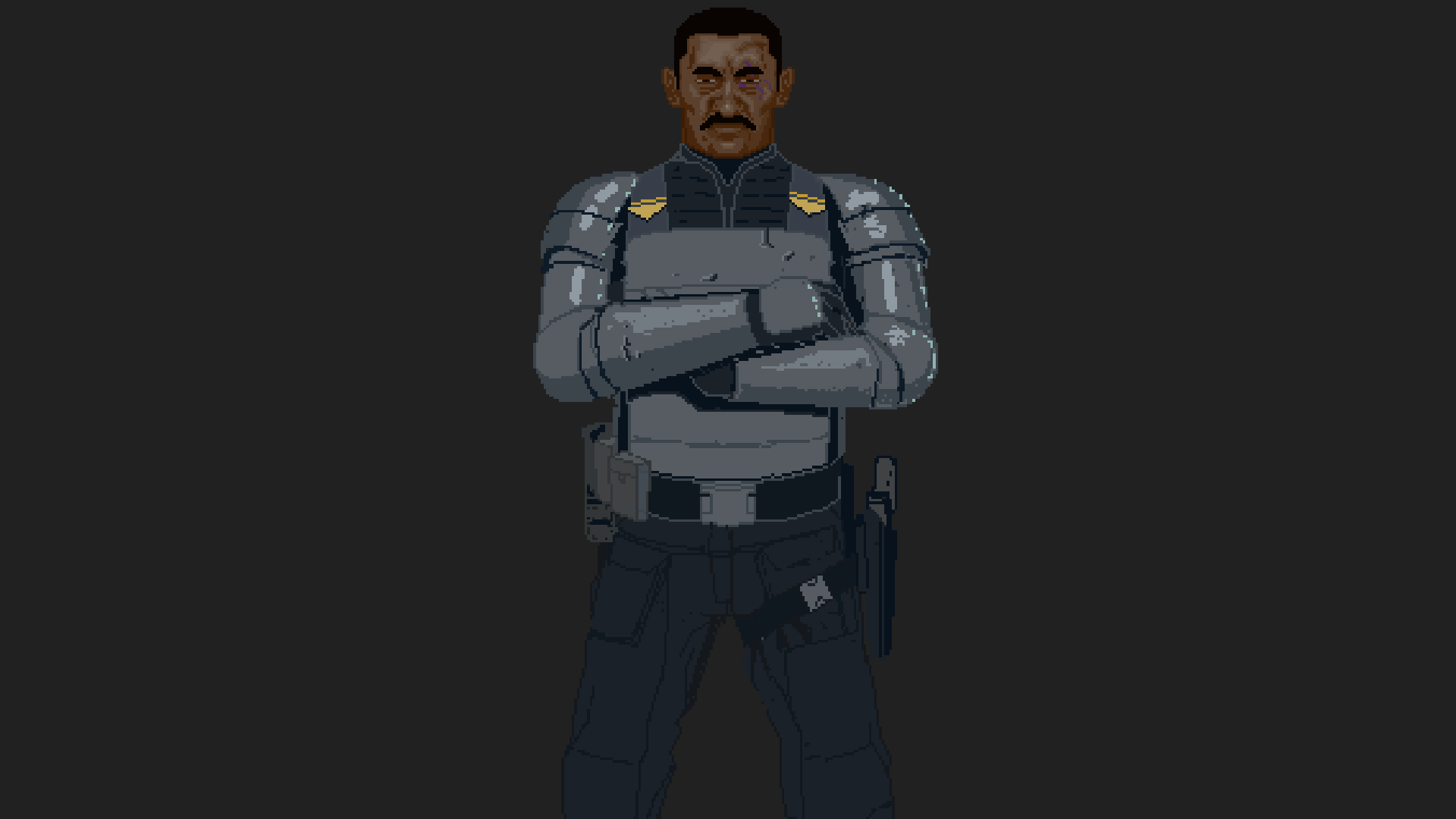
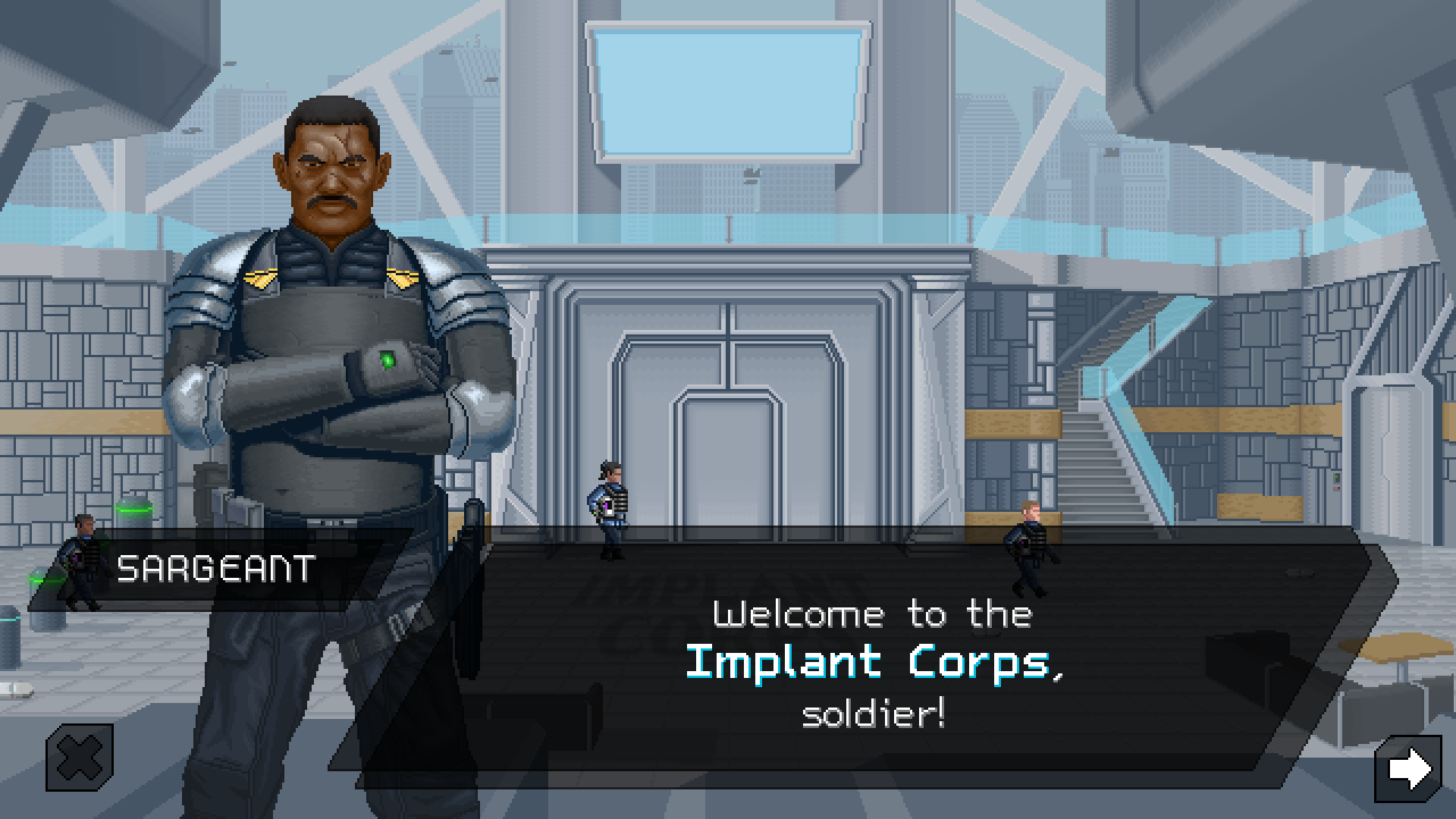
Early concept art through to the final in-game designs
Dave: I also want to mention that while I am the sole developer of the game, I paid a few teammates as contractors. Igor Motuz is the incredible artist, and two others contributed sound effects and music: Beni.Maru and Dillan Schmitz (aka King Aurorus). We all live in or near Calgary, Canada. A lot of music was licensed by a variety of amazing synthwave artists from NewRetroWave Records; also, had some voice acting done by people in Calgary, like Russel Schultz who voiced Furniture Man and narrated the trailer.
Home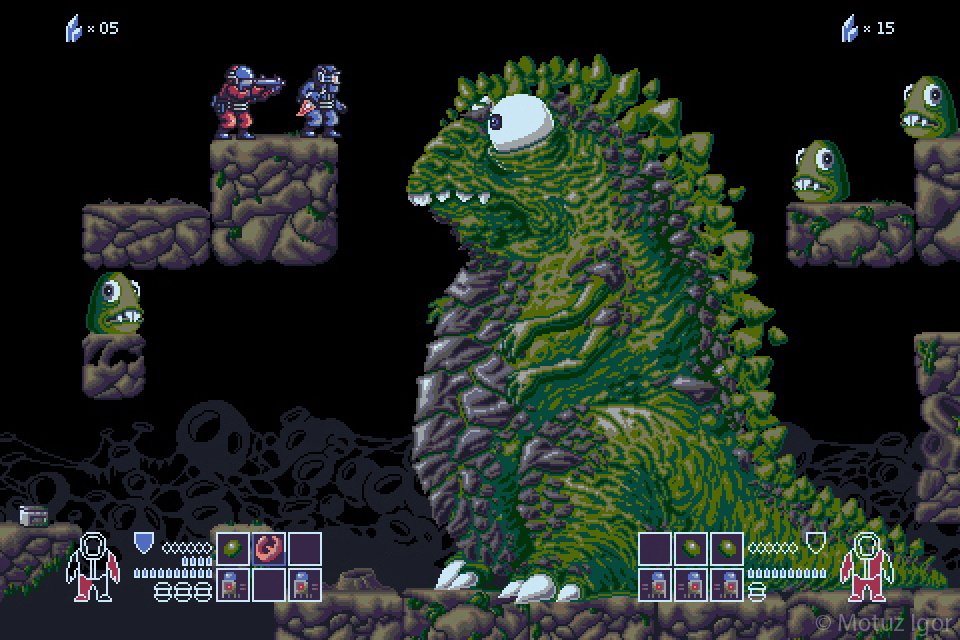



Jared: It's great that you were able to lean on the creative industry within Calgary. While remote work is brilliant for the most part there's a different type of energy that comes with collaborators you can meet with face-to-face to discuss the project.
Jared: Thinking about the core gameplay loop, what design decisions did you make to give Forehead Chip its own unique identity?
Dave: Capturing instead of killing enemies was the main design decision that I went with. It really limited what we could do, you can’t just pick up an enemy chainsaw and use that because you would be killing them and not capturing them. The Implant Corps wants everyone alive, technically speaking. In reality, capturing an enemy isn’t that different from killing them - they both disappear from the screen - so I added a further mechanic of collecting bullets.
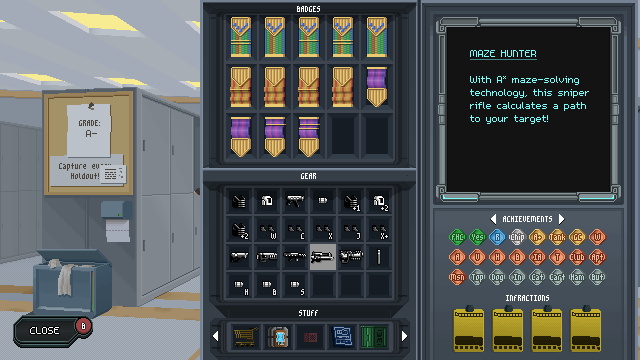
Dave: Collecting bullets that you shoot was the main a mechanic I went with early on. In a lot of shooters, you spam bullets, I wanted to make it more tactical. It definitely increases the difficulty and players who rush will find themselves doing poorly. You can, of course, upgrade your weapons and ammo to make things easier. Like you can get boomerang ammo so it comes back to you, strong ammo that smashes away enemy projectiles and doors, or trap ammo that can capture multiple enemies. You can get weapons like the Maze-Hunter gun that calculates a path to the enemy to shoot them around corners, or the Void Sucker gun that creates a mini-blackhole to suction in enemies within a radius.
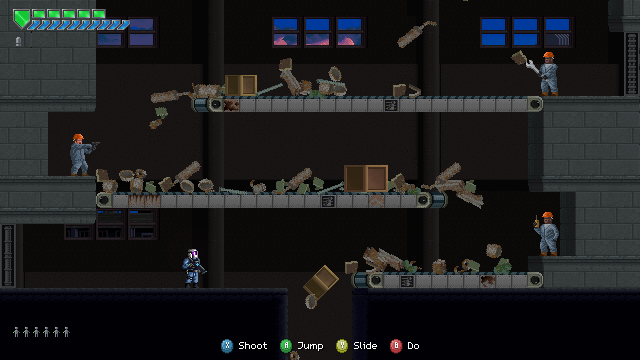
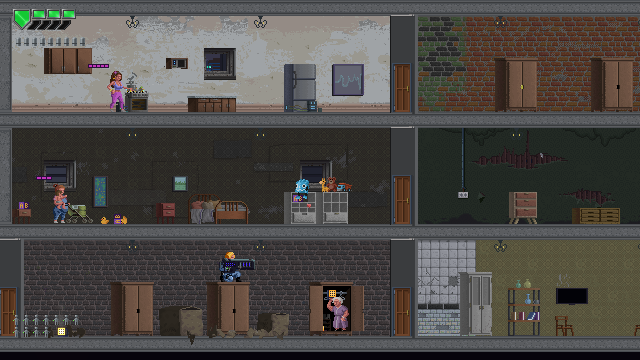
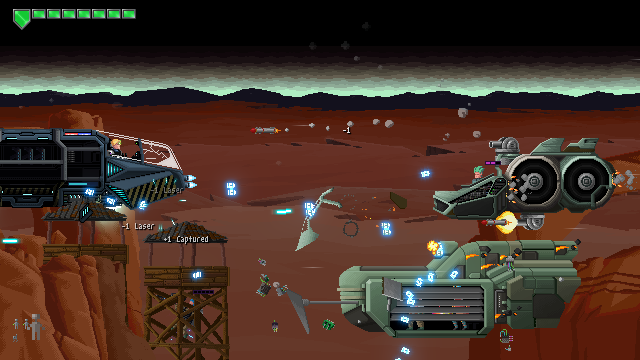
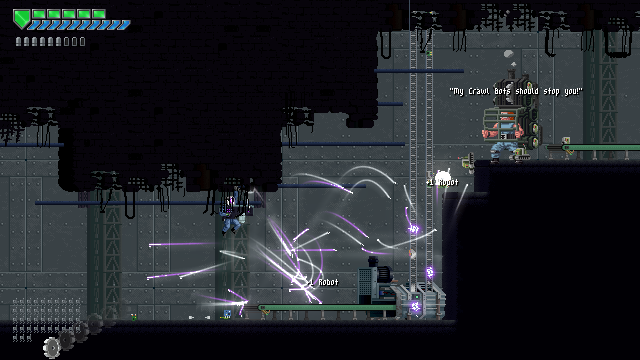
Dave: Beyond that, there is a pacifist path in the game, where you aren’t capturing anyone at all. That means you aren’t shooting, but dodging. You still need your weapon in some situations, because you need to blow up robots and machines, it makes players consider various different strategies to complete a level. As a developer, it also makes level design trickier because I need to account for different ways a player can run through them. There’s “favours” you can do on levels, like finding and collecting special items, either bringing them back with you on a Dropship or delivering them to specific NPCs in the level. Honestly it’s probably more than the average player will experience so I may have gone overboard!
Jared: I think it's a smart design choice to allow players a wide range of approaches they can take to a level. It'll encourage multiple runs of the game as well as giving a lot of secrets for the completionists to go looking for. As you were developing the world of Forehead Chip, what were the biggest creative influences for the game? From my perspective there seems to be echoes of 80s action movies and maybe some classic Duke Nukem sprinkled in there too?
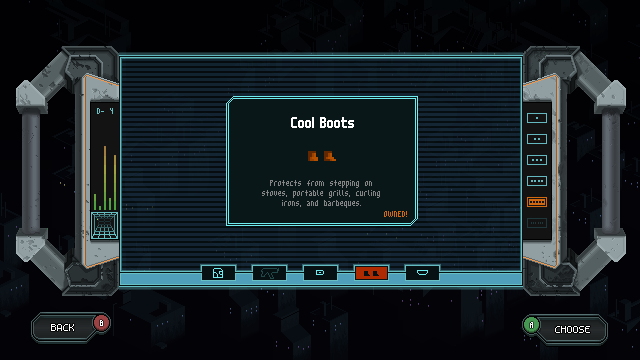
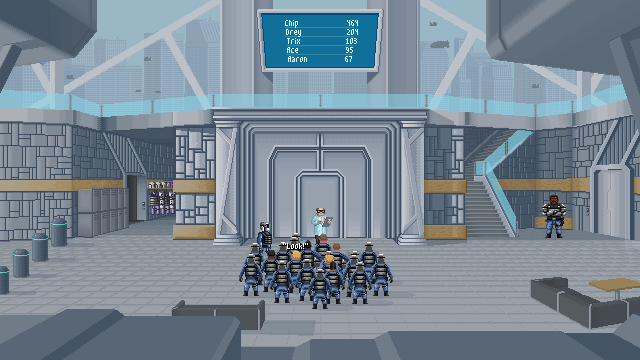
Dave: I was definitely inspired by movies most of all. Demolition Man, Running Man, Starship Troopers, and so on. I wanted to make a game that was like being in one of those zany sci-fi movies, where the experience was very contained and thematic. I found a lot of games were focused quite heavily on the mechanics and leaving story to be secondary or even pasted on. And there is a place for those games of course, they are fun. I just wanted the story and themes to be the focus of this game.
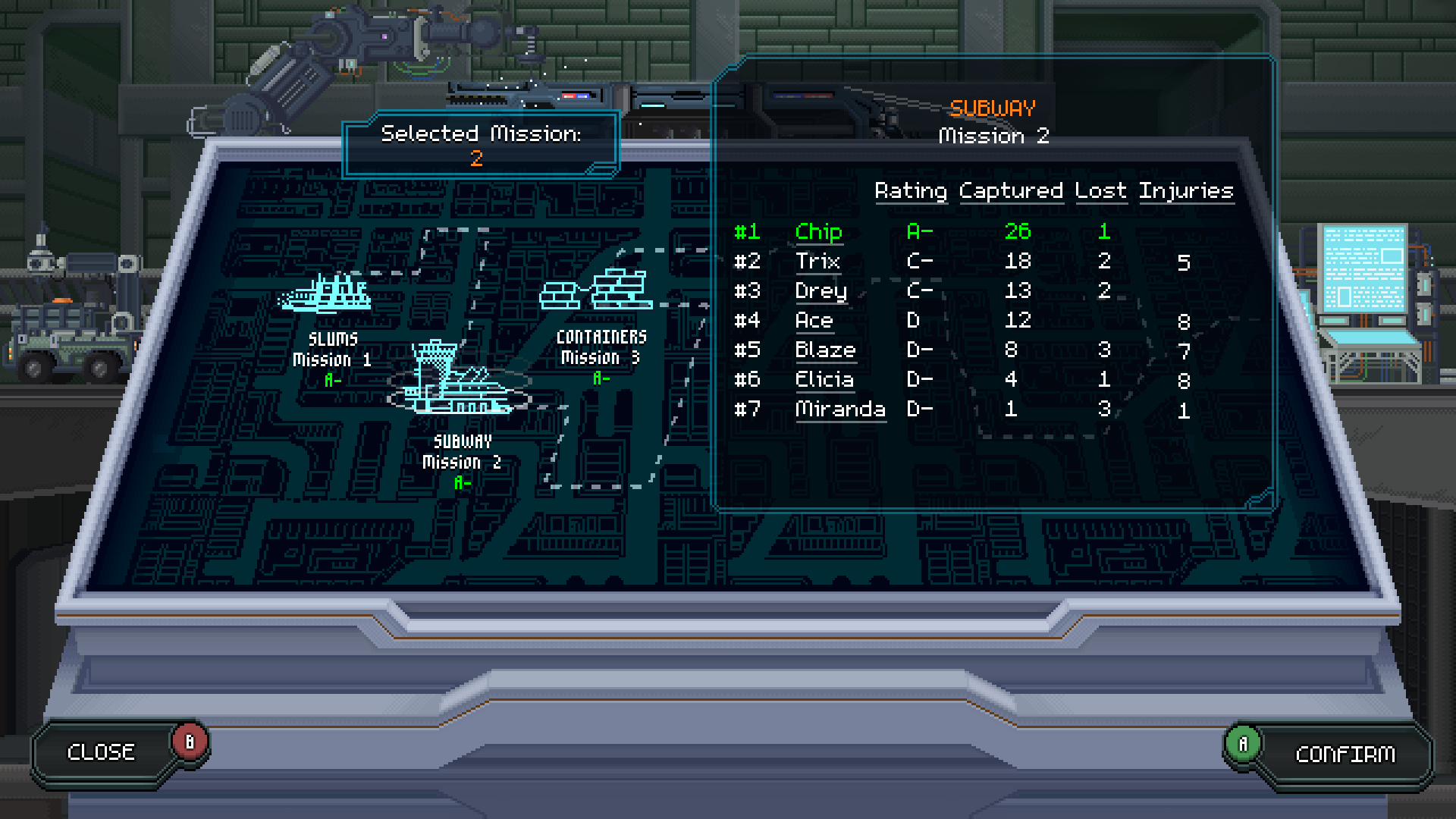
Dave: Gameplay-wise, I was going for something like Contra, but we (the artist and I) were later inspired by watching a Towerfall tournament to add multiplayer. Another game that inspired me was Wing Commander, where it has a chalkboard with counts of your kills and your comrades kills. I took that and combined it with the Starship Troopers public grade screen, and added a big public Scoreboard in the game, where you can see your rank vs the NPCs like your brother, hopefully motivating you to score better than them.
Jared: Did these influences also guide the game's visual style? Was the aim always for the game to be seen through a nostalgic lens for the 16-bit era?
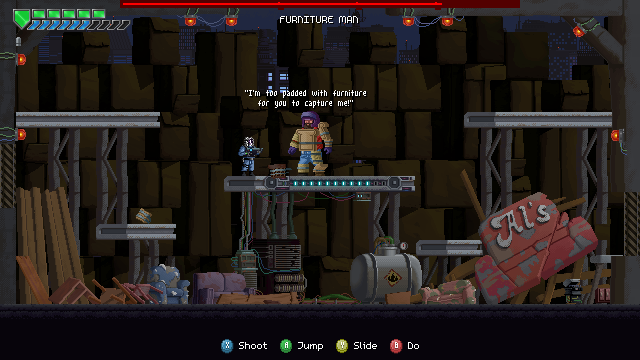
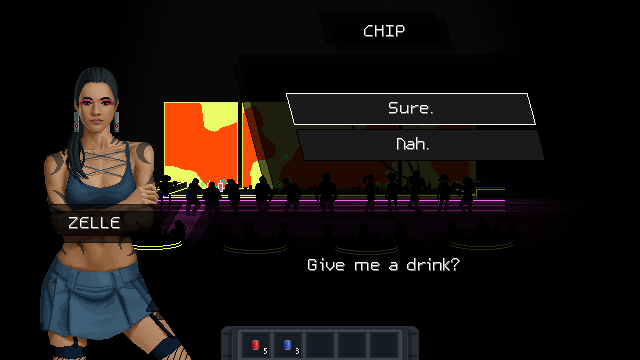
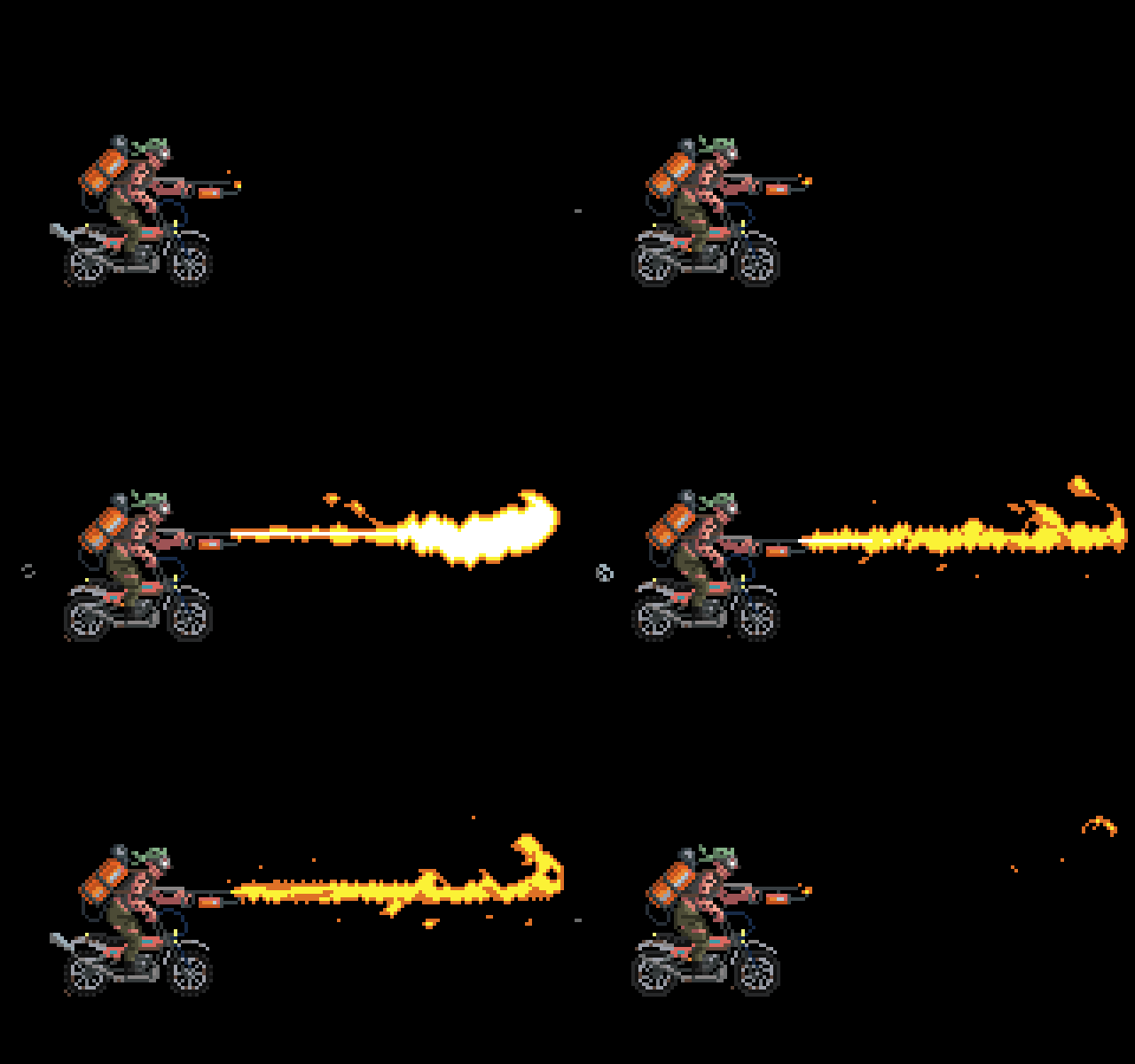
Dave: I’m just a lover of pixel art. And the artist I work with, Igor Motuz, is very talented at it. He is inspired a lot by Metal Slug. I’m inspired by old Sierra games and more, the list is endless. But I can’t draw. More accurately, I am terrible at colouring. Igor is amazing at it. We spent years making art, here and there, on and off, I would give him concepts and sketches, he would take those and make them real. He would also add his own ideas for things and a lot of them made it into the game. Like the Flame Biker, the flame-thrower-wielding enemy on a motorbike, was just a random idea Igor drew and I can’t imagine the game without it now!
Jared: You mentioned that you were inspired to add multiplayer after watching a Towerfall tournament. What technical challenges were introduced by adding multiplayer partway through the project? Were there any other major technical challenges?
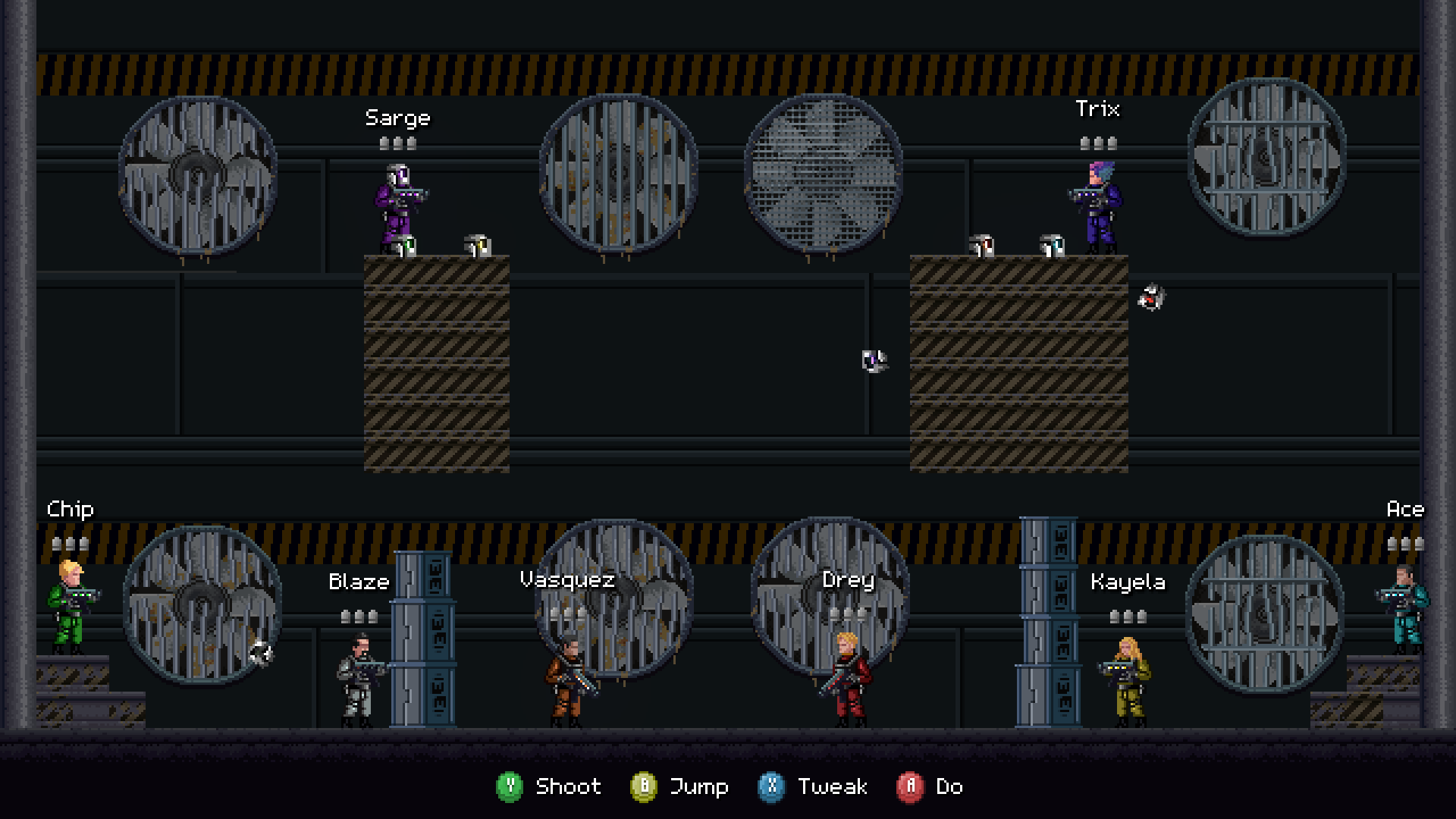
Dave: The game was always meant to be single-player, and was single-player until 2023 at that Towerfall tournament. Igor and I were sitting in the seats watching, and noticed that game had single-screen 640x360 arenas. It’s perfect for a game that is being watched by the audience. Really easy to understand, no zooming out, no split-screen. We realised our game was the same resolution, and the characters roughly the same size. So I tried an experiment with multiplayer and... it just worked! And when playtesting, it was super fun! It got so fun that when we were playtesting and demoing, people thought the game was multiplayer only. The multiplayer mode was always meant to be a bonus to the single-player experience, but it took on a momentum of its own!
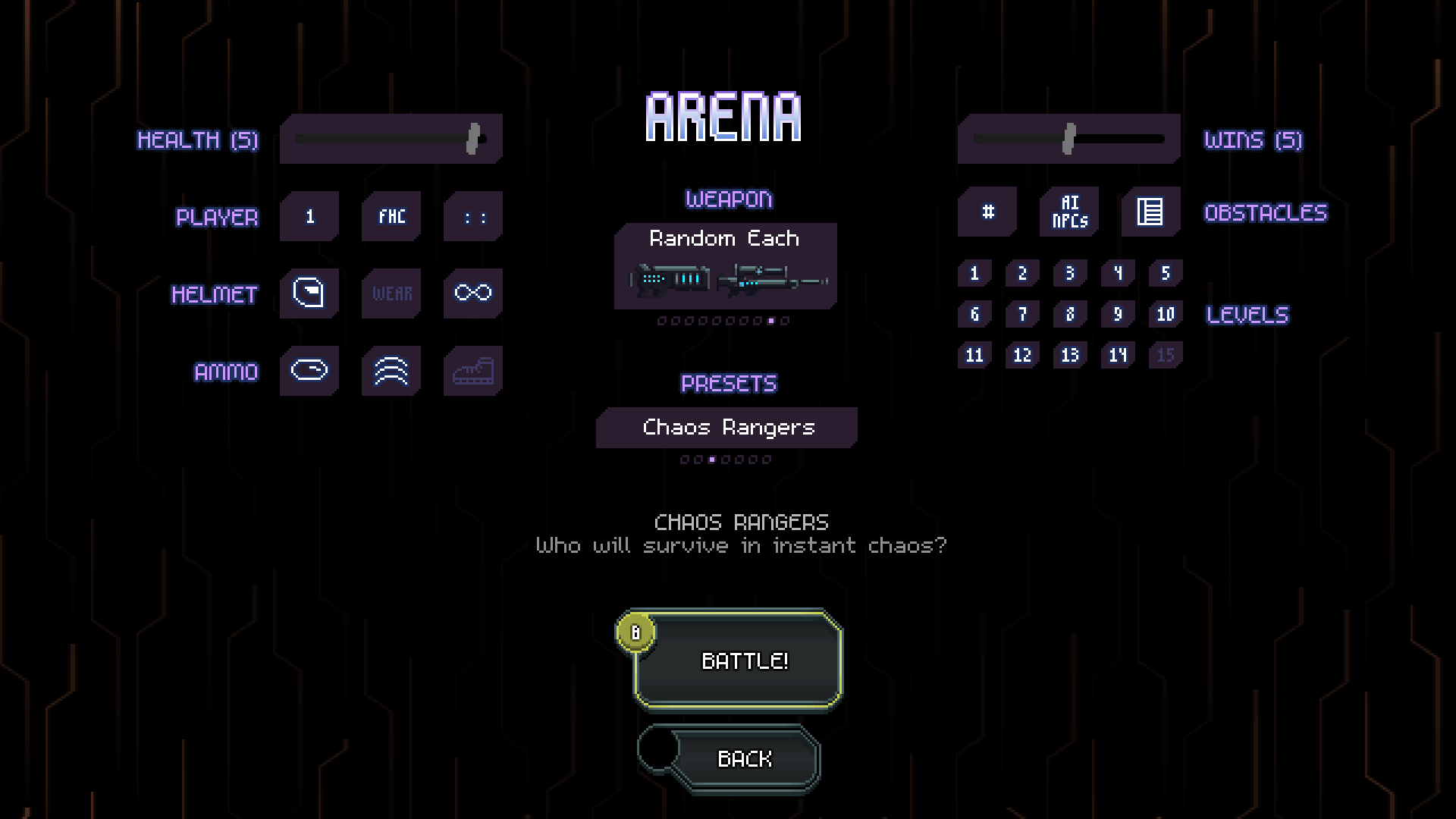
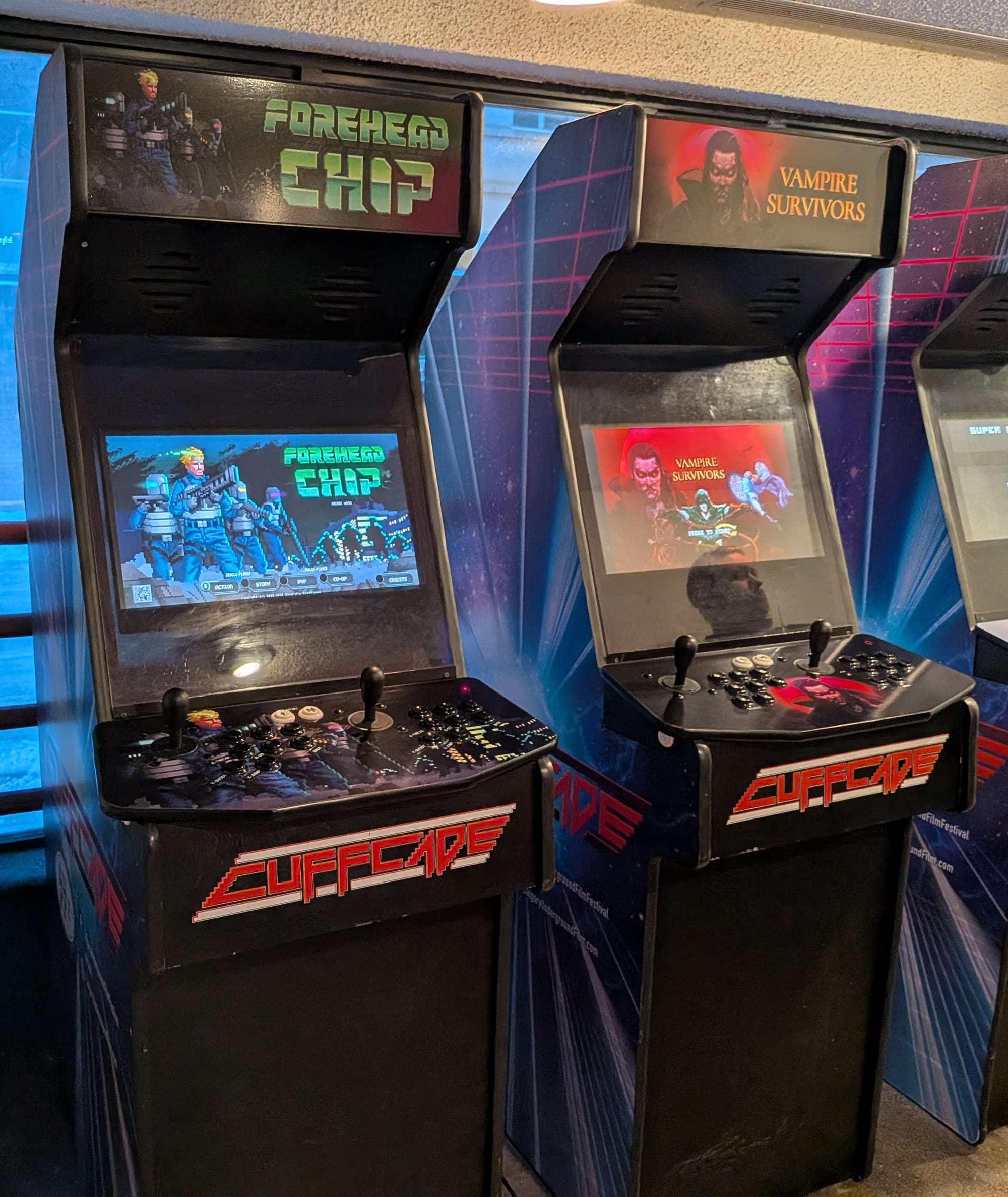
Dave: In terms of technical challenges this brought, probably the most annoying thing was dealing with control remapping and control schemes, where there are all sorts of devices. Nintendo controllers have different layouts than Xbox, for example. Aftermarket Nintendo controllers have different layouts. Keeping the jump button at the bottom and the shoot button on the left is harder than I thought, and still can be an issue if you plug in enough different brands of controllers! Adding support to run the game in an arcade cabinet was also a hurdle, but sorted it out with extensive config file options.
Dave: Another huge deal was migrating from Godot 3 to Godot 4. That took over a month of effort on my part, although that was years ago. That migration, while bringing a lot of great new features, lost a really nice glow effect in v3 that I haven’t been able to replicate in v4. I ended up writing a complex and configurable glow shader to make up for it… but still miss that Godot 3 glow. I also gave up on some technical goals that were too much for me, like adding Steam Input support, co-op split screen, OSX builds, and abandoned a 2D-in-3D experiment (think Last Night) that would have added years to completion.
Dave: As for Godot Engine, it is a joy to use, and I love looking forward to updates and interacting with the community! I built this in Linux, Ubuntu MATE. No AI was used for code, art, or anything else. Other tools included GIMP, Aseprite, Sprite Illuminator, Audacity, BitWig, and KDenLive for assembling trailers.
Jared: I don't think there's any shame in making trade-offs to ensure that the project actually gets completed. "Perfect is the enemy of good" and all that. I think it's fair to say that the game is still packed full of features!
Jared: Staying on the theme of multiplayer. I heard that you took over a local theatre to promote the game with a tournament? Can you tell us a bit more about that?
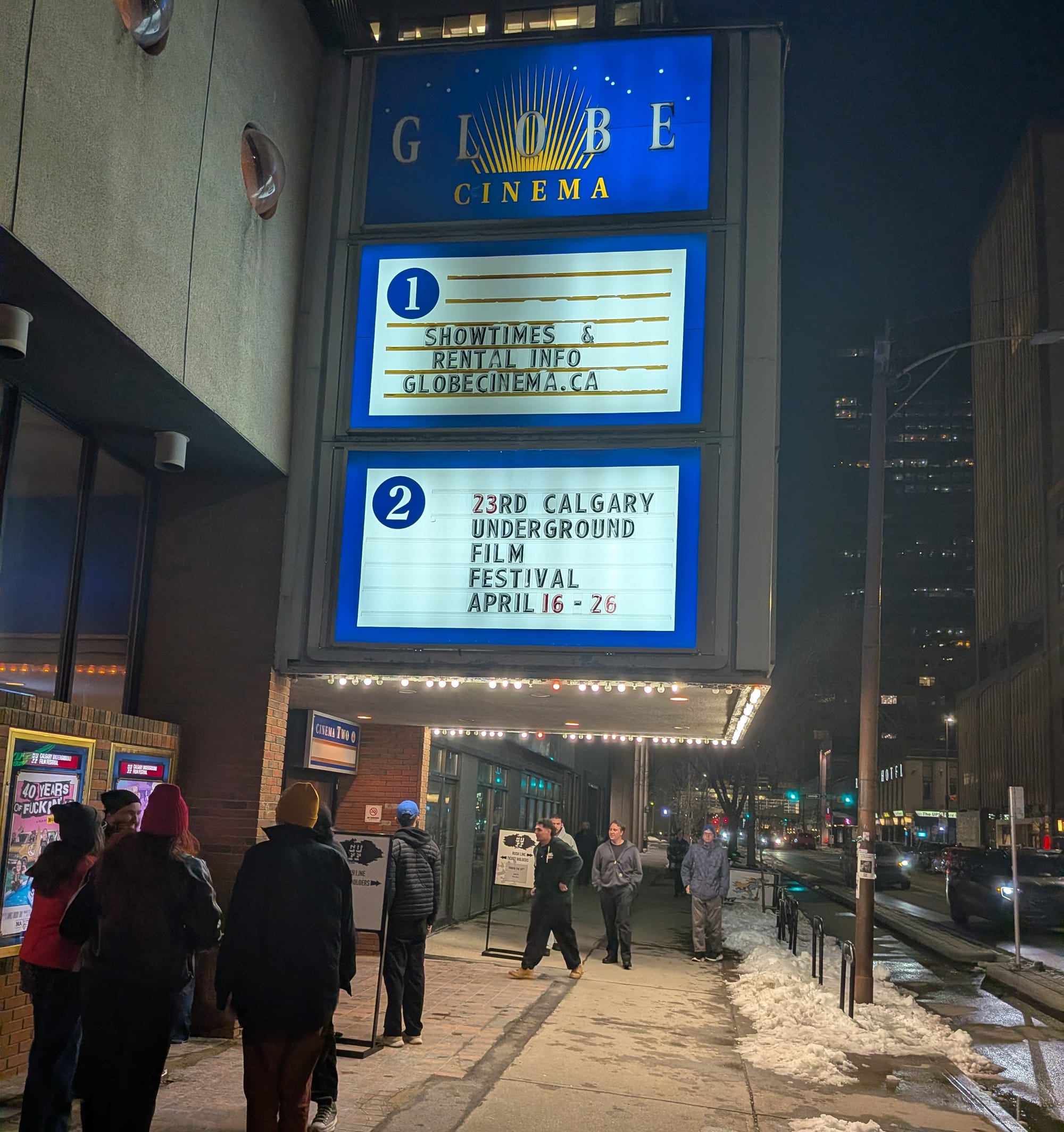
Dave: Yes, the event Indie Game Bash runs at the Calgary Underground Film Festival every year, at the Globe Cinema. We tapped into one of the projectors so that the audience can watch the game. Groups of players take turns competing against each other, they play on a TV for latency and the audience watches the theatre screen. The winners go on to the next bracket until one winner remains, and they get prizes, like Steam gift cards, consoles, etc, depending on the year. I wouldn’t even say this was to promote the game, but just to have fun and celebrate it and see it on a big screen.
 Structured Abstraction Inc.
Dave: Of course we didn’t want to be a clone of another game, and we wanted to add something special. Little things like putting the player’s name or nickname above the character really helps the audience get into the tournament. That way they can see who is who, and can cheer for their favourite or even root against players. Without that name badge it can become meaningless.
Dave: I also added the feature of allowing a round end with everyone losing - the winner still has to stay alive until the next round. That brings out so many reactions from the audience when someone wins a decisive match, but gets hit by a stray bullet at the last second, giving another player a chance at redemption! Cheers, "ooos" and "aaas", and a lot of laughter, really make running the tournament a satisfying pleasure! But, I’m always self-doubting that I gave the players the best settings or not: was it too chaotic? Too unfair? Not enough rounds?
Jared: It sounds like an amazing event and I'm glad you guys were able to celebrate the game on the big screen in the days leading up to Forehead Chip's launch. It must have been a really rewarding experience for you and the rest of the team.
Jared: Looking ahead, what's next for Naturally Intelligent? I can see that you've currently got two projects listed as coming soon on Steam, are you able to tell us more about these?
Dave: I’ll be maintaining Forehead Chip for any bug fixes, patches, polish, etc. and will likely add new PVP arenas, and a PVP arena level editor if there is demand for one. If the game does well, I will add more content that missed the cut, and if it does really well, an online mode. I have ideas for a sequel too but can't reveal anything just yet.
Dave: The two other games listed on Steam, I had run Kickstarters for but they both failed. Failing a crowdfunding campaign can really suck the momentum out of a project, so they are abandoned at the moment unfortunately. However, if Forehead Chip does well enough, I’ll have the funds to re-evaluate and potentially look to finish those games.
Dave: Otherwise, I don’t know what the future is, a lot depends on the success or failure of this game. It’s a tough market in the gaming industry, it’s hard to get traction, and Forehead Chip can come off as a very odd quirky concept. Without popularity and coverage, there is the threat of going unnoticed. It’s all funded by myself, no publisher, and my marketing reach is really limited. We were fortunate enough to get our trailer released by IGN, so there is hope! I’m really happy with what we’ve built though, and I’m satisfied with the accomplishment.
Dave: I have a couple game prototypes that I'd love to bring to completion, but we'll see. At the very least I’ll be participating in game jams through the Calgary Game Developers Association (CGDA) and see if any interesting prototypes come from them that can be turned into releases.
Jared: Hopefully Forehead Chip will do well enough to give you the time and money needed for your next project. I'm sure the readers are rooting for you too.
Dave: Thank you! And thank you for the thoughtful interview Jared!
Jared: Likewise! Thanks for your time and hopefully I'll be able to invite you back after the release of your next project!
Forehead Chip was released on the 1st May 2026 and is available to purchase on Steam here: https://store.steampowered.com/app/2171910/Forehead_Chip/